

Caprolactam Processing
Introduction
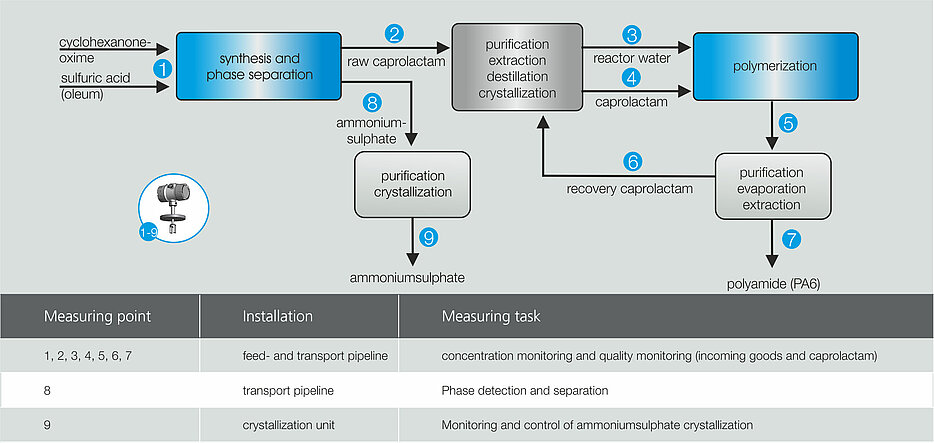
Polyamides are among the most common thermo-plastic synthetic materials. Caprolactam (CPL) is the main raw material for these polymers, especially for PA6 (nylon 6). The monomer caprolactam is produced in a complex process, consisting of 4 main parts:
- synthesis of raw caprolactam
- separation and crystallization of ammoniumsulphate
- purification and preparation of raw caprolactam
- polymerisation of polycaprolactam (PA6)
The raw caprolactam production is based on the key intermediate cyclohexanone oxime, which is usually made by cyclohexanone, hydroxylamine and H2SO4. By adding of ammonia and oleum, the raw caprolactam is synthesized and separated of the ammonium sulphate phase. The following steps for the monomer caprolactam are the purification and concentrating (extraction, destillation and crystallization) and the polymerization step. Finally, residual monomers are separated from the polymer (recovery CPL).
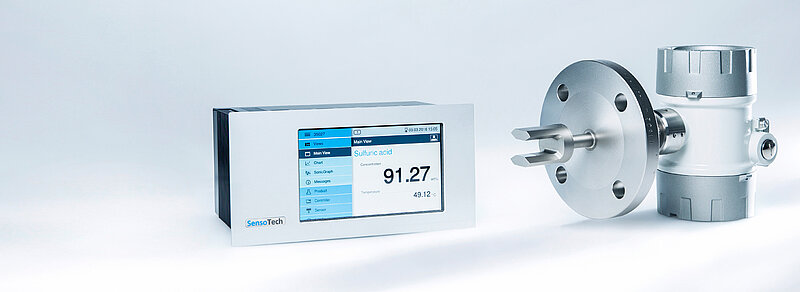
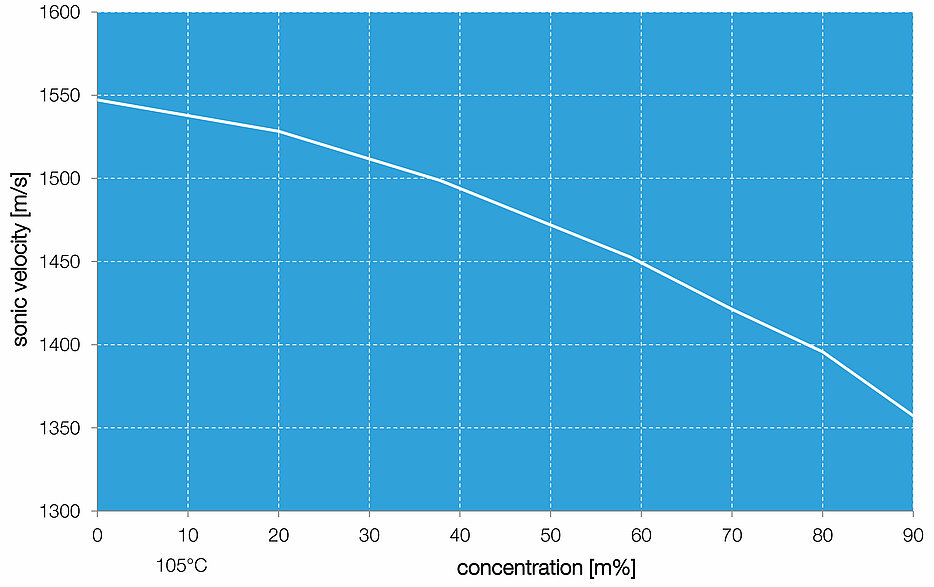
LiquiSonic® Sonic Velocity measurement in Caprolactam
Application
The robust inline analyzer LiquiSonic® offers several advantages within quality monitoring and optimal process control at several measuring tasks:
- incoming goods control
- Beckmann rearrangement: H2SO4 / oleum
- phase separation of CPL and ammonium sulphate
- crystallization monitoring of ammonium sulphate
- extraction: concentration CPL in solvent
- destillation: concentration CPL in water
- reaktor water: water in caprolactam
LiquiSonic® is used for high-precision concentration value determination (incoming goods, caprolactam), phase detection/separation and process monitoring (crystallization). The internal limit value monitoring signals exceeding or falling below thresholds and transfers the real-time information via analog or digital outputs, serial interfaces, or fieldbus (Profibus DP, Modbus) to the process control system.
Installation
The LiquiSonic® immersion sensor is easily installed into the feed and transport pipelines. Installing the LiquiSonic® sensor eliminates dead space and avoids high installation costs for bypasses.
By using the LiquiSonic® controller 30, up to four sensors can be connected, allowing the simultaneous monitoring of several measuring points.
Typical measuring ranges:
concentration range caprolactam: 70 - 100 wt% temperature range: 80 - 130 °C (175 - 265 °F)
concentration range caprolactam: 0 - 10 wt% temperature range: 20 - 70 °C (70 - 160 °F)
Incoming goods control:
concentration range oleum : 0 - 30 wt% temperature range: 10 - 60 °C (50 - 140 °F)
Customer value
The robust sensor construction and the optional special materials, like HC 2000 oder PFA, promote long process life. In addition, SensoTech offers sensors approved by ATEX, IECEx and FM. LiquiSonic® enables a reduction of labor cost through the elimination of manual process steps:
- time saving: 1 h per day
Trough precise LiquiSonic® monitoring, the concentration of residual CPL monomers can be reduced to a minimum, which increases the plant productivity.
